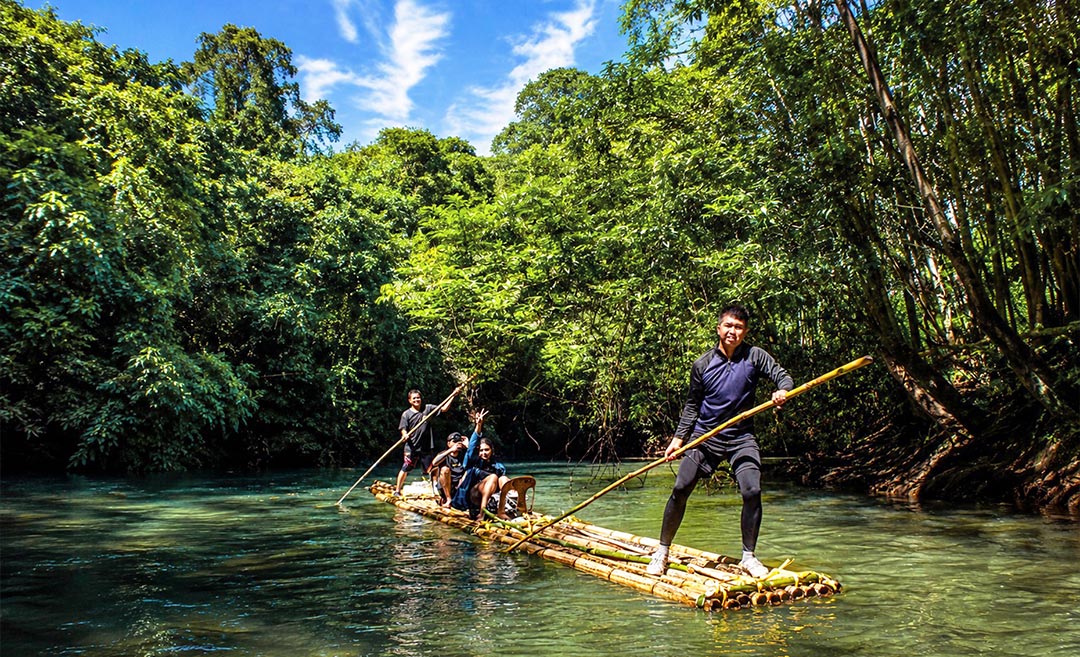
Explore Sarawak’s Sirin River by bamboo raft, discovering Bidayuh culture, forest cuisine, and community-based tourism near Kuching. (Image by David Bowden)
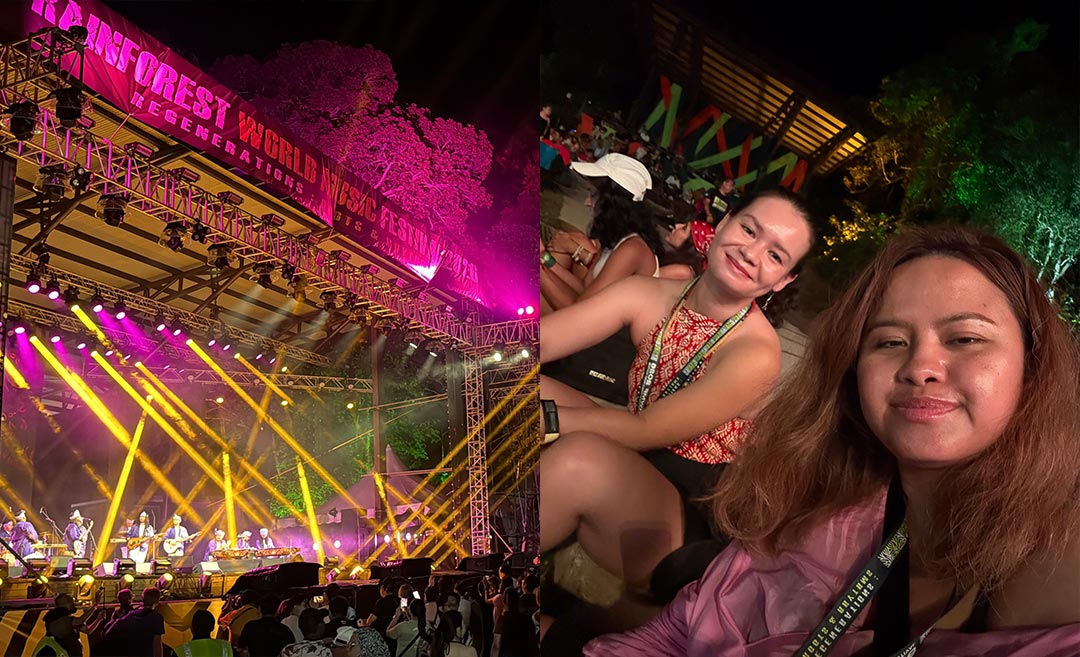
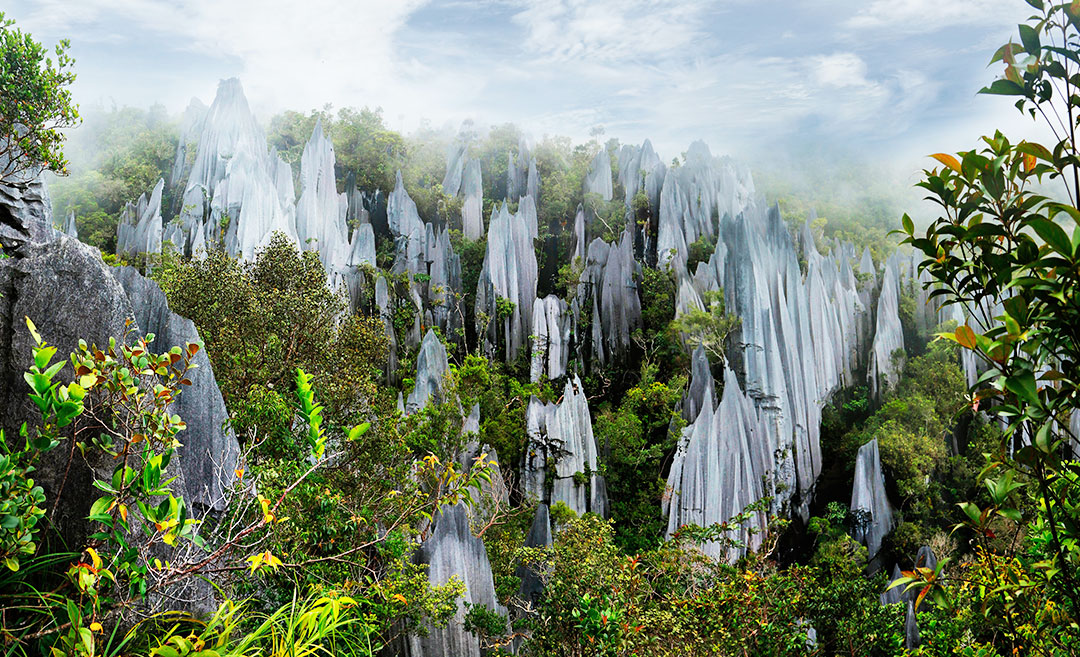
One thing I especially enjoy about attending the annual Rainforest World Music Festival in Damai, Sarawak, is discovering more of Borneo beyond the music. Although Sarawak is part of Malaysia, it always feels like a foreign holiday because Borneo, the world’s third-largest island, is so different from Peninsular Malaysia with its ancient forests, Indigenous cultures, and unique landscapes.
During my most recent trip, I added a few extra days after the June festival to explore further. A chance meeting with locals led us south of Kuching to Kampung Peraya, a Bidayuh village where we experienced bamboo rafting along the peaceful Sirin River, followed by a forest-to-table lunch prepared by the community.
Discovering Kampung Peraya and the Sirin River
After conducting our research, we initially planned to book the rafting trip directly with Borneo Adventure Stay. However, a chance meeting with an Avis representative led the four of us to hire a vehicle instead. We drove to Kampung Peraya, spent half a day rafting, and stopped at Semenggoh Wildlife Reserve on the way back. Having the car also allowed us to explore Kuching’s lively nightlife later that evening.
Kuching is getting busier, but after navigating the morning peak hour traffic, we were travelling through the countryside and feeling all the better for it. Kampung Peraya is a Bidayuh community located in the wilds of Borneo, southwest of Siburan.
We were met by Valentine Ritong, who operates the village-based bamboo rafting operation on the Sirin River. His team of local rafters were putting the final preparations to the rafts before our leisurely two-hour journey down the river.
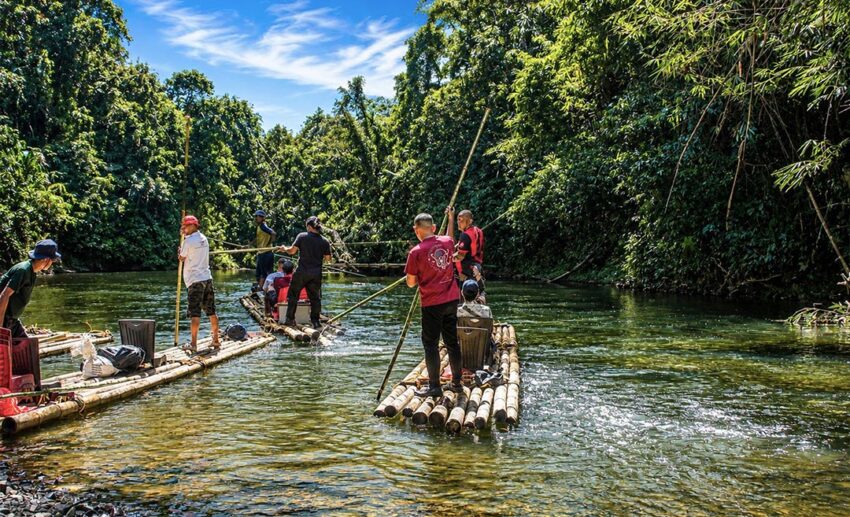
While Valentine’s team of local village men prepared the raft, we learned some details about the Bidayuh people. Valentine told us they were well known as peace-loving and easy-going people. He added that they were notorious for their hospitality and are still reputed to be the best makers of tuak (rice wine). Their easy nature led to others taking advantage of them, so they retreated from the lowlands to seek refuge in the mountainous areas of Sarawak. They built fortified longhouses, which led Europeans to call them Land Dayaks to distinguish them from the Iban, or the Sea Dayaks.
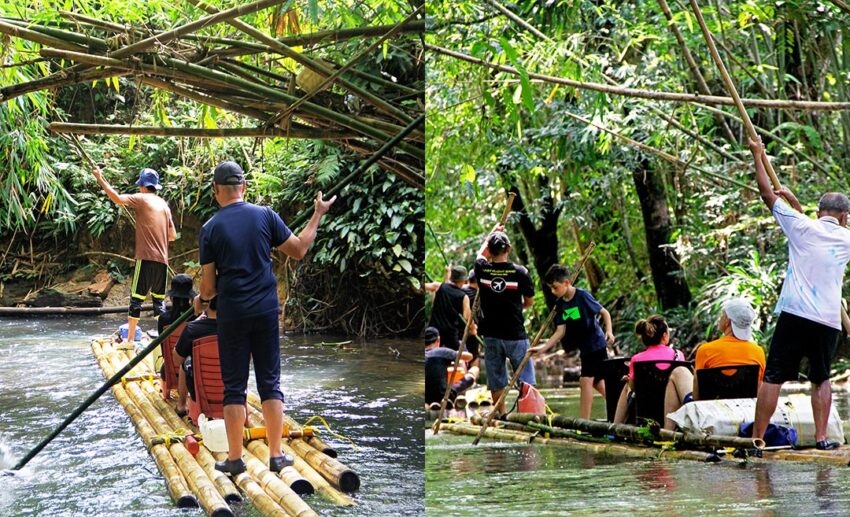
Having taken that in, we walked down the riverbank to get on our bamboo rafts of about 8 metres in length, strapped solidly together by binding.
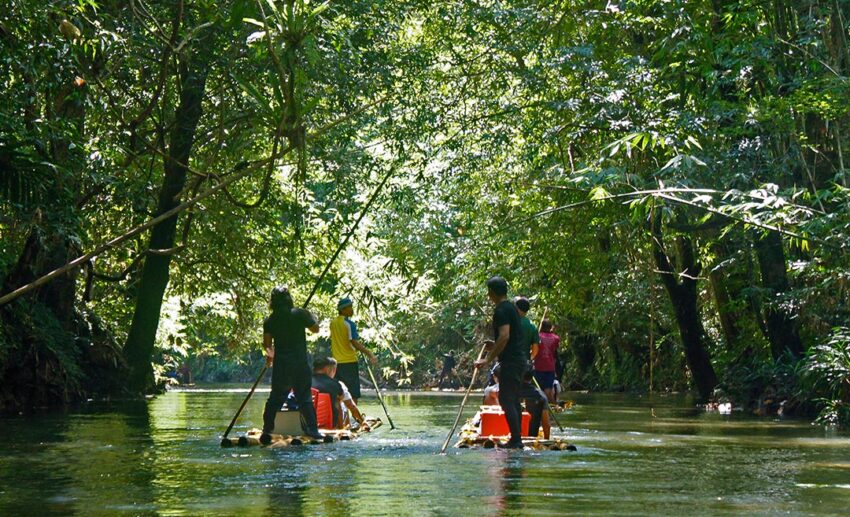
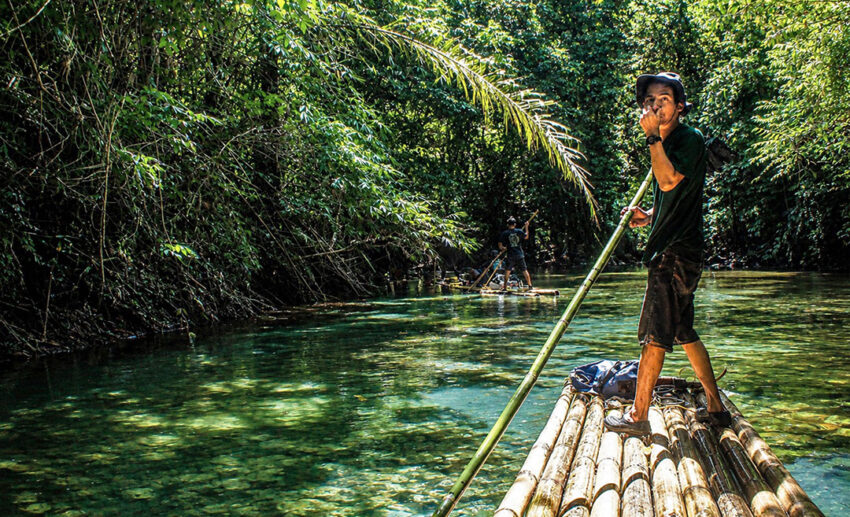
Each raft has two rafters, one at the front and one at the rear, while we sat on low plastic stools admiring the scenery. The journey is most uneventful apart from a few small, low, rocky rapids, and at a few points, we had to alight from the raft and walk briefly along the riverbank.
Bamboo rafting through Bidayuh country
The Bidayuh use bamboo for almost everything. Long, straight poles are used to make rafts, but bamboo is also used to build houses, make containers, craft musical instruments, make cooking utensils, and the young shoots are eaten, as we found out at lunchtime. At the end of the river journey, the binding is undone, and the bamboo poles are trucked back to the starting point for the next expedition.
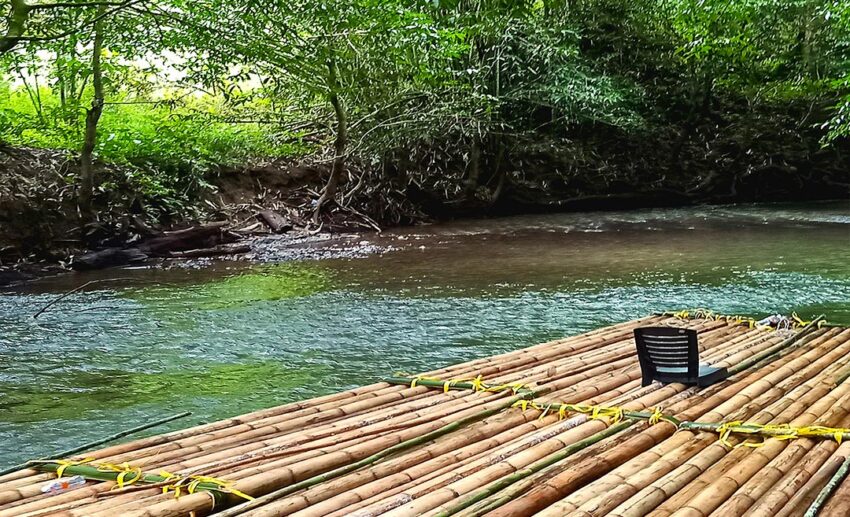
The rafts are propelled down the gently flowing river without too much effort, except when a rapid is encountered. Fear not, these are small rocky outcrops that require the rafter’s skill in negotiating the hazard. If the rafters are not fully alert, the raft could get wedged on rocks, and the rafter may be thrown into the water, as happened to one of my companions. There were shrieks of laughter from all the other rafters as our guide at the back launched himself into the shallow water. Fortunately, there was no harm done.
Forest cuisine: A Bidayuh meal prepared by nature
After an hour or so, we pulled into a makeshift bankside camp, and while we enjoyed a well-earned shot of tuak, the team went off foraging in the forest for young bamboo shoots, a wild mango that I’d never seen before, midin (edible jungle fern) and other native forest products. The river was deep enough to immerse ourselves and cool down.
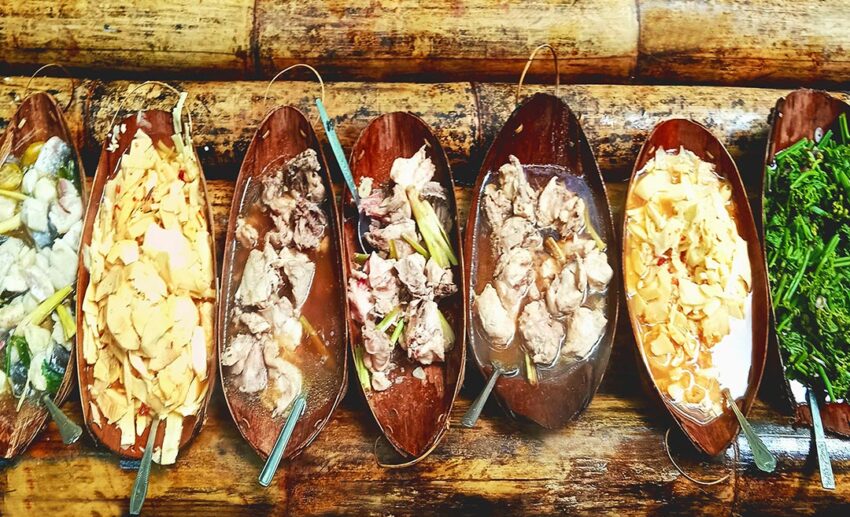
Everyone knew their job and got on with preparing a sumptuous forest lunch, including pansoh manok (bamboo chicken rice). The chicken was about the only food not sourced from the river and forest and was cooked inside bamboo over a fire. Aromatic herbs and chicken pieces were stuffed inside the hollow bamboo and cooked for 30 minutes.
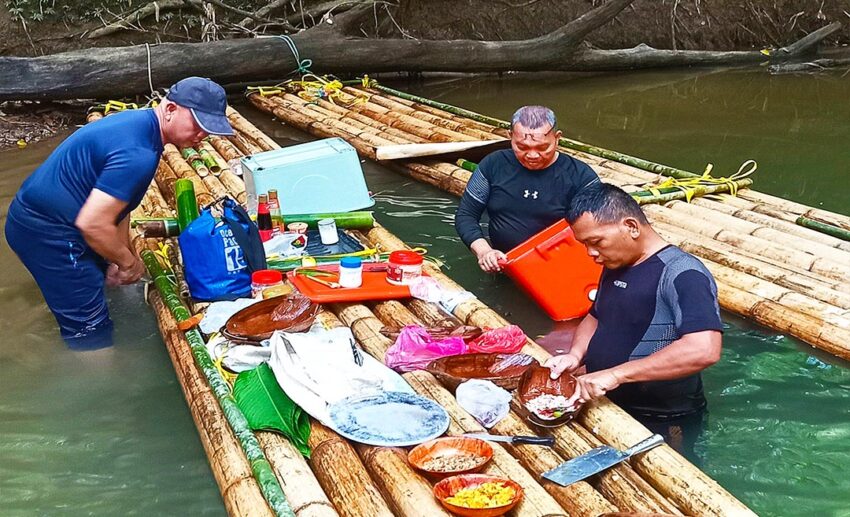
Lunch was served with rice that had been steamed inside gigantic forest leaves. A spicy sambal of wild mango and chilli added an essential kick to the meal. Lemongrass tea served in bamboo cups completed a very filling feast.
After lunch, we got back on the rafts for the final 30 minutes down the river to the village longhouse.
While we were content to let the rafters do their work, adventurous visitors can join in the fun and propel the raft down the river. Valentine says that he has had a range of guests who join his expeditions, from young children accompanied by their parents to spritely seniors.
A Visit to the Orangutan Rehabilitation Centre
While we didn’t stay in the kampung longhouse, we noted that it had facilities for extended visits. The basic accommodation caters for up to six visitors, and mattresses, pillows, and blankets are provided. Toilets and showers are adjacent to the accommodation.
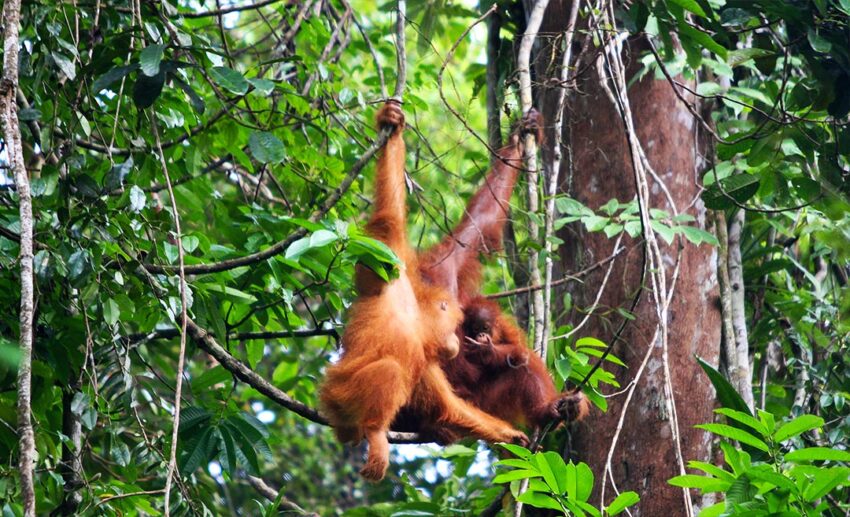
Our timing was perfect as we had time to drop by Semenggoh Wildlife Centre for its 3pm feeding. Semenggoh is a rehabilitation centre where orphaned or abandoned orangutans are rehabilitated before being released back into the wild. The set-up here is well organised and semi-natural, and it’s possible to get close to these endangered apes. However, it’s important to appreciate that it is natural, so the apes may appear, or they may not. The chance of seeing them is quite good at Semenggoh.
Borneo Adventure Stay can tailor-make a programme for visitors that takes in the orangutans, rafting and a longhouse stay.
Zafigo Tips: What to know before bamboo rafting in Sarawak
Bamboo rafting on the Sirin River is a gentle way to experience Sarawak’s forests and Bidayuh culture, but a little preparation will make the journey more comfortable.
Know what to expect
This is not the adrenaline-filled whitewater rafting experience that some travellers may imagine. The Sirin River is generally calm, with only a few small rocky sections where the rafters need to carefully guide the bamboo rafts through. However, like any river activity, conditions can change after heavy rain, so it is best to check with the operator before your trip.
Dress for getting wet
The tropical climate in Sarawak means it can be warm, humid, and rainy. Wear comfortable clothing that dries quickly, and pack:
- A light cotton T-shirt
- Shorts or comfortable trousers
- Swimwear if you plan to cool off in the river
- A change of clothes
- A lightweight raincoat
- Sandals or flip-flops
- A sun hat and sunscreen
Women travellers may also find it useful to bring a small towel, hair ties, and a waterproof pouch for personal essentials, especially if they are travelling solo or packing light.
Keep your belongings dry
David recommends taking a waterproof bag or zip-lock plastic bag to protect your camera and phone. A water bottle is also useful, particularly for travellers who dehydrate easily in Sarawak’s heat and humidity.
Check your travel insurance
While this bamboo rafting experience is not considered dangerous, David is a strong advocate for travel insurance whenever taking part in outdoor activities. Before purchasing a policy, read the fine print to ensure activities such as river rafting or adventure experiences are covered.
Travel prepared, but stay open to the experience
Nature activities in Sarawak often involve stepping away from familiar comforts, whether that means travelling by river, walking through forests, or spending time in rural communities. Choosing reputable local operators and asking questions before an activity can help build confidence while still leaving room for discovery.
All photos are by and courtesy of the writer, David Bowden, unless otherwise stated.