Cycling 135 miles along Ireland’s Wild Atlantic Way proves beginner bikepacking is achievable with proper preparation, flexible planning, and resilience.
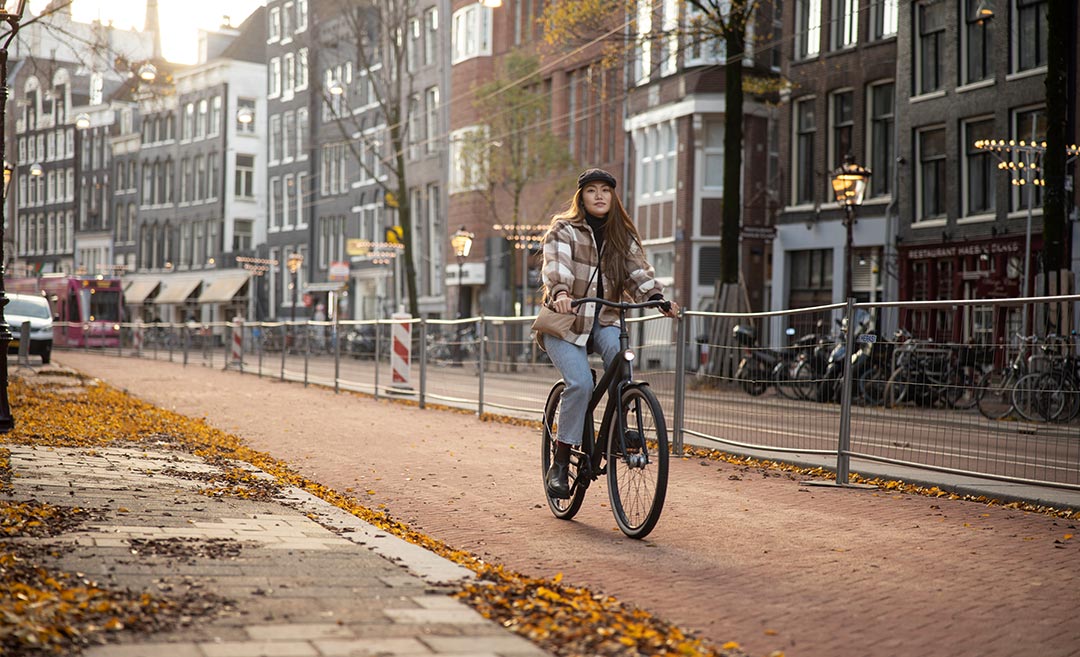
The shop owner stifled her laughter as I practised cycling up and down the street in front of her shop. I was terrible. I’d not been on a bike in about 10 years, and although they say you never forget the skill, it was clear that I had completely and utterly forgotten how to travel on two wheels. It was 2015, and we were in Amsterdam, the first time my husband and I rented bikes together.
That day was a baptism of fire as I navigated the busiest bicycle-filled city in Europe. I really struggled, and if anything, it knocked my confidence more. Over the years, we would go on to hire bikes in more European cities, such as Vienna, Copenhagen, and Oslo, often electric bikes, for a few hours or a day here and there. After 10 years of relearning and rebuilding my self-belief, I could cycle quite well. I am no expert, but I am at least capable.
We’re hikers at heart, and often do long-distance hiking with all of our food, water, clothes, and camping equipment. We love being fully self-sufficient and getting off-grid.
Early this year, my husband started talking about ‘bikepacking’. It was a term I’d heard but never been intrigued by. But the way he framed it was interesting. We could do what we do when we hike by carrying all of our gear and everything we need; we’d simply be able to travel further in less time. When he suggested we go to Ireland to try it, a country I adore, I was sold.
Why Ireland was the perfect place to start

For our first bikepacking trip, we deliberately chose somewhere that would remove as many unknowns as possible. Ireland was familiar enough to feel comfortable, but the Wild Atlantic Way offered exactly the kind of scenery and challenge we were looking for.
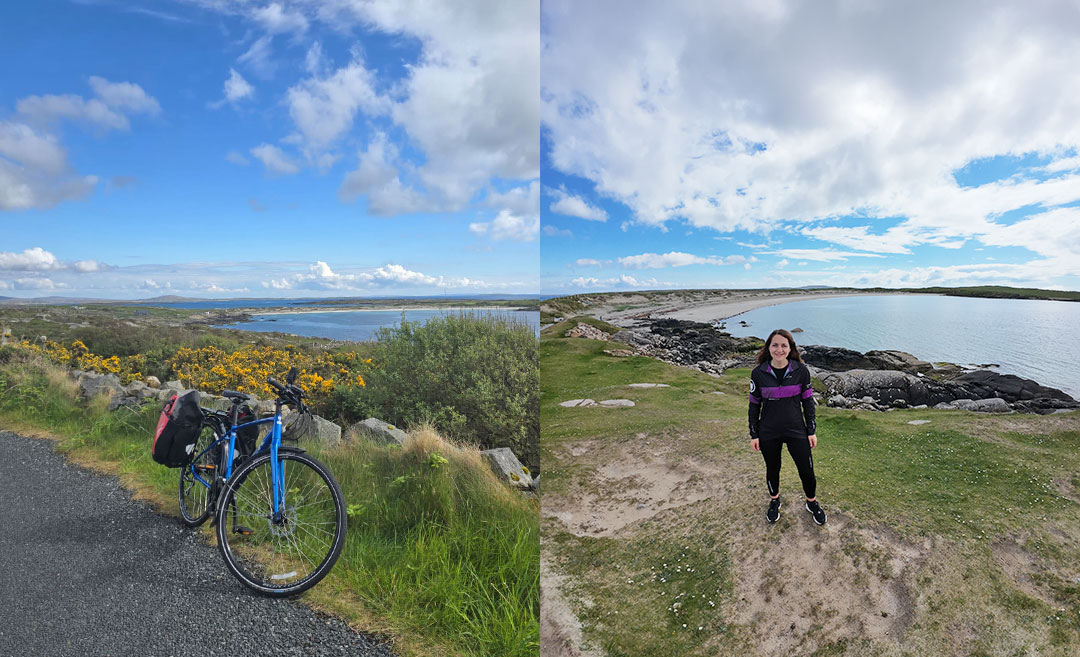
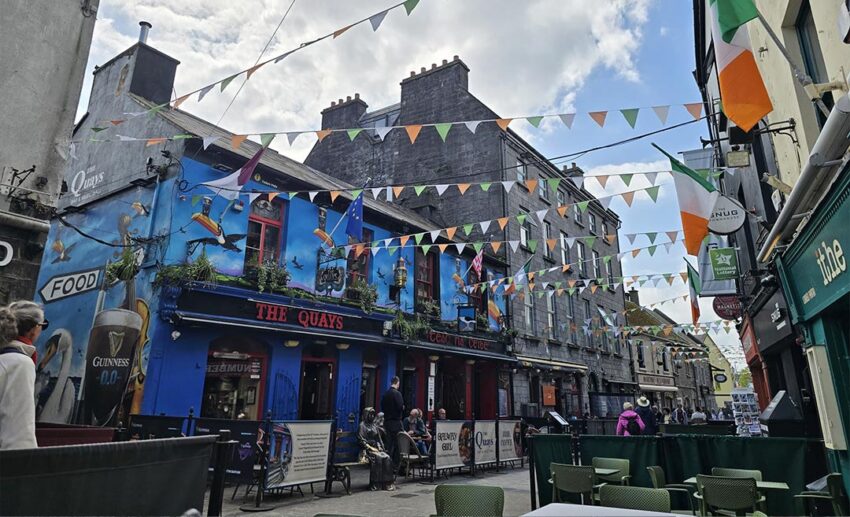
We flew into Shannon on a Friday morning, hired a car for three days, and spent the afternoon exploring Galway before collecting our bikes. We had booked them from West Ireland Cycling, which made the whole process considerably easier. The bikes were already set up for touring, complete with panniers, so we didn’t have to worry about transporting our own bikes, finding suitable luggage, or working out how to attach everything.
That decision was important. Being a beginner is intimidating enough without adding unnecessary logistical problems.
With only two full days, we planned a loop from Galway rather than attempting to tackle a huge section of the Wild Atlantic Way. The route would take us west along the coast before cutting inland and eventually bringing us back to the city.
The Wild Atlantic Way itself stretches for around 2,600km along Ireland’s western coastline, so there was plenty to choose from. Our route was a tiny fraction of it, but it was more than enough for a first attempt.
What we packed for two days of bikepacking
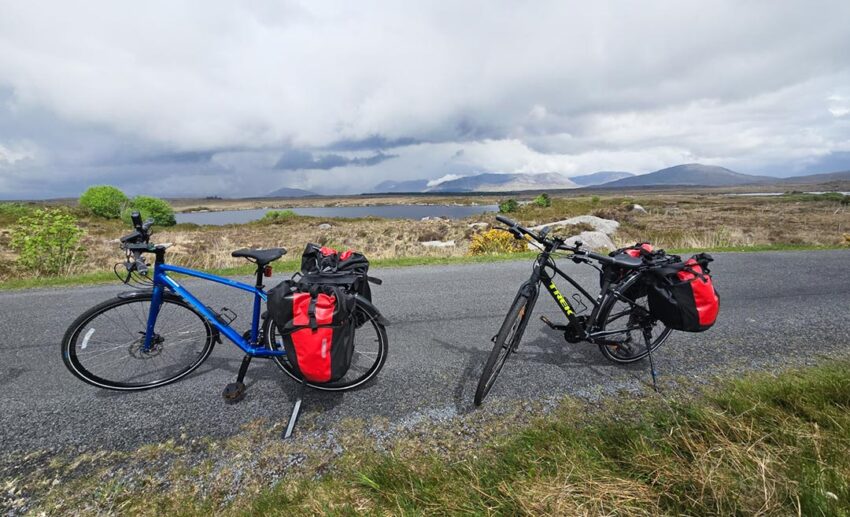
One of the things that attracted us to bikepacking was the idea that it would allow us to approach cycling in much the same way we approach hiking.
We could carry everything we needed and be completely self-sufficient, stopping wherever we wanted rather than worrying about hotels or luggage transfers.
Between us, we carried two panniers each, carefully distributing the weight so neither bike became too cumbersome. Inside were clothes, a tent, sleeping bags, roll mats, food, first aid supplies, and puncture repair equipment, along with 2L of water each.
We also packed plenty of snacks: fruit, cereal bars, and nuts became particularly important once the miles started adding up.
There’s something satisfying about knowing that everything you need for the next couple of days is sitting beside you in four small bags. It also teaches you what you actually need, and what you really don’t.
Day One: 70 miles along Ireland’s Wild Atlantic Way
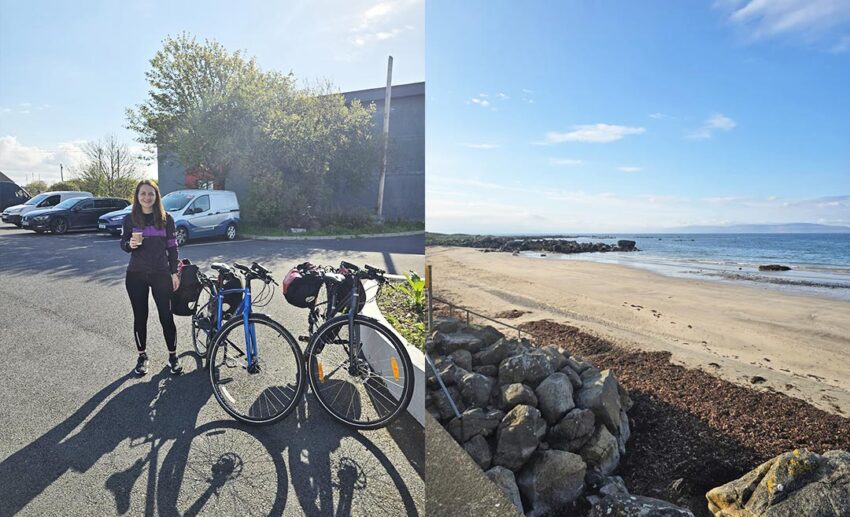
Saturday started almost suspiciously perfect.
We headed west out of Galway along the Wild Atlantic Way, cycling on smooth, undulating roads with the Atlantic stretching out beside us. The scenery was spectacular, but we quickly discovered another advantage of travelling by bike: we could stop whenever something caught our eye.
Our first proper stop was POTA in Baile na hAbhann, where a flat white tasted particularly good after the first stretch of cycling. About an hour later, we stopped at Cooke’s Caife Casla for another coffee and, because it was hot and sunny and we were already hungry, an ice cream.
We continued towards the Wild Atlantic Way Discovery Point at Teach An Phiarsaigh, where the staff kindly let us use the facilities and look around the exhibits for free because it was quiet.
Eventually, at Derryrush, we left the main road and took a tiny single-track route towards Lehanagh South. This cut out a sizeable section of the R340 and brought us back towards the coast.
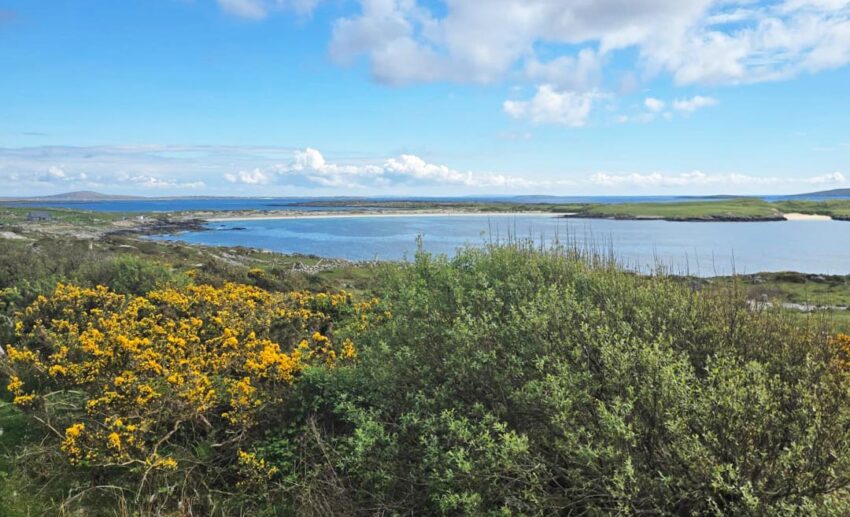
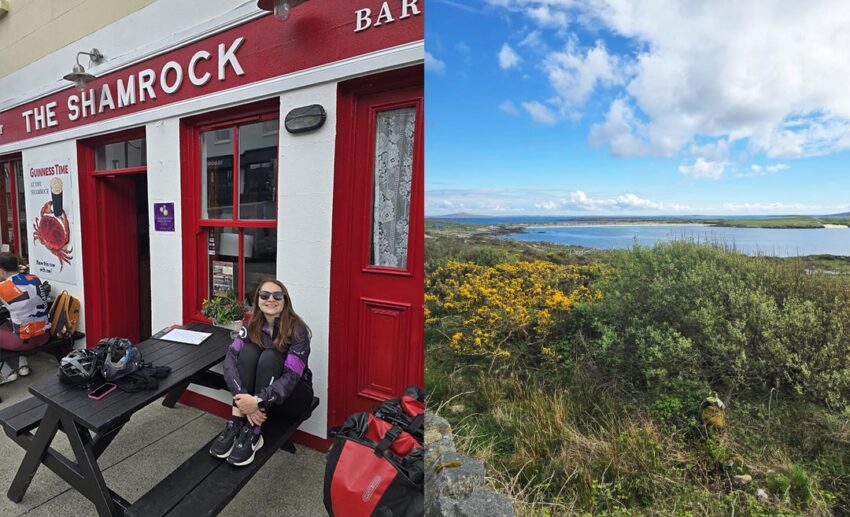
By the time we reached Roundstone, we were ready for lunch. We stopped at The Shamrock Bar and Restaurant for fresh fish and our first Guinness of the day before heading to nearby Dog’s Bay, one of Ireland’s most beautiful beaches.
It was the perfect place to stop, soak up the views, and linger in the sunshine, which glistened on turquoise water and white sand. Then we remembered that we still had to cycle back up the enormous hill we had just descended.
By around 3pm, we were exhausted. We limped into a pub in Ballyconneely, knowing we still had around 10km to go. I was sore, sunburnt, exhausted, and very close to giving up.
But eventually, we rolled triumphantly into Clifden. We had cycled 70 miles in one day.
Day Two: Rain, hills, and learning to adapt
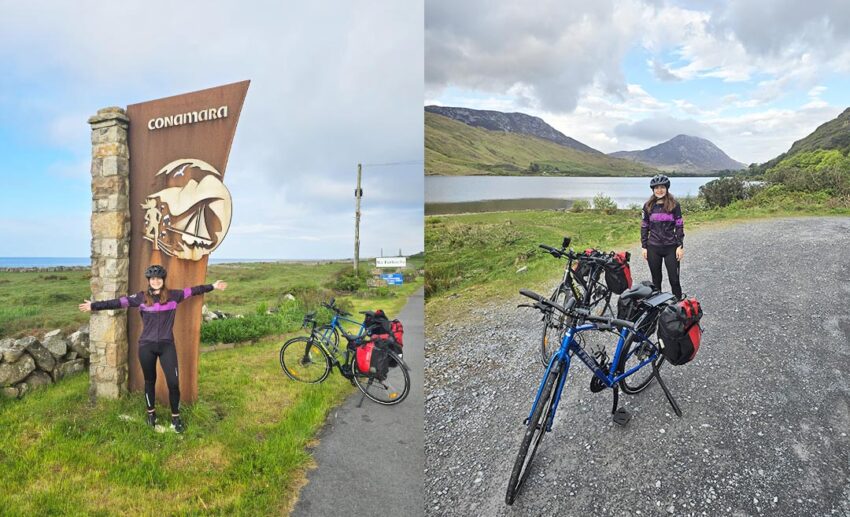
If the first day showed us how exhilarating bikepacking could be, the second showed us why preparation and a willingness to adapt matter.
We left our campsite at 6am on Sunday. Our bodies were furious with us, but the roads were almost completely deserted, and the early-morning light made the first few hours beautiful.
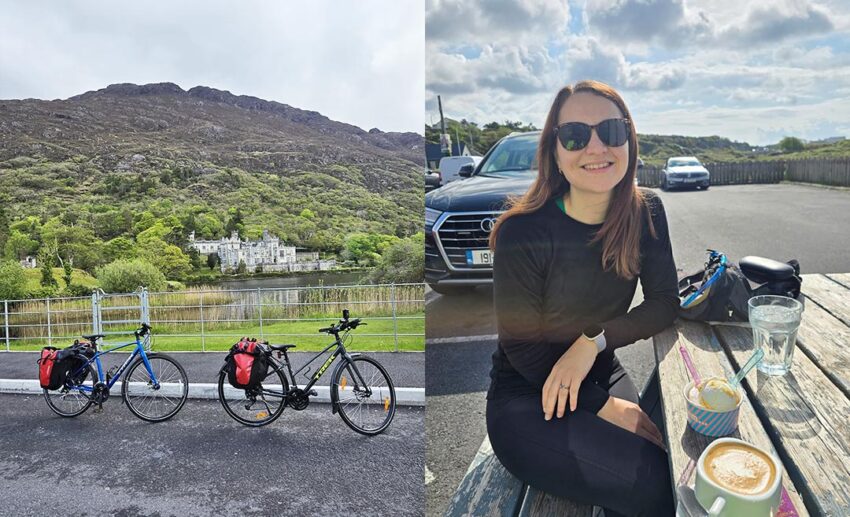
We cycled towards Letterfrack and world-famous Connemara National Park, climbing through the landscape and catching glimpses of the sea. We passed Kylemore Abbey while it was still closed, but managed to get through the gates for a quick photograph.
Then the weather changed, and rain suddenly arrived. Within minutes, we were completely soaked, cycling through a biblical downpour with barely any visibility.
Our planned stop at The Purple Door Café in Leenaun became less of a casual breakfast and more of a survival mission. When we finally reached it, we ran inside dripping from head to toe and inhaled coffee and cooked breakfasts while our clothes produced puddles.
A Plan B matters when you’re a beginner
The biggest lesson from our trip was that being adventurous doesn’t mean being reckless. And being a beginner is fun so long as you plan well.
We had always planned a back-up option. If we couldn’t complete the loop, we knew there were places where we could catch a bus back to Galway. The company that we hired bikes from also had a number we could call for help.
These safety nets made a huge difference to us psychologically.
Later that day, after leaving the Wild Atlantic Way and heading inland, we reached a point where we were exhausted and questioning why we were doing this at all. We had cycled through rain, tackled hills, and eventually found ourselves on the busy N59 with cars passing at speed.
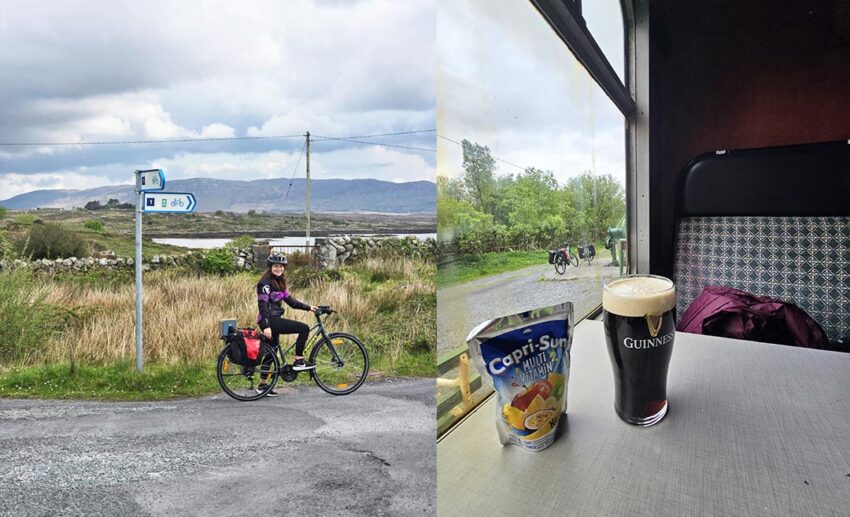
We stopped at an old railway carriage to get out of the rain, have a drink, and check our route. We were doing much better than we thought, so we carried on.
After lunch in Oughterard, we deliberately sought quieter roads and avoided the busier roads around the city, eventually following country lanes towards Moycullen and back into Galway. At 4pm, we returned the bikes.
135 miles completed in two days.
What I learned from being a bikepacking beginner
I went into the trip thinking the biggest challenge would be cycling that far. It wasn’t. It was learning to manage the voice in my head telling me I couldn’t do it.
There were moments when I was genuinely miserable. My muscles hurt, my calves ached, my backside was on fire, and at various points I wondered whether we had made a terrible mistake.
But there were also moments when I felt completely exhilarated and carefree, almost childlike.
That is perhaps the best thing about being a beginner. You don’t need to be particularly good at something for it to feel like an achievement. Every hill becomes something you conquered, every extra mile something you earned.
And because we had built our trip around skills we already had, like navigation, camping, hiking, and being comfortable outdoors, bikepacking didn’t feel quite as frightening as it might have done if we had started from scratch.
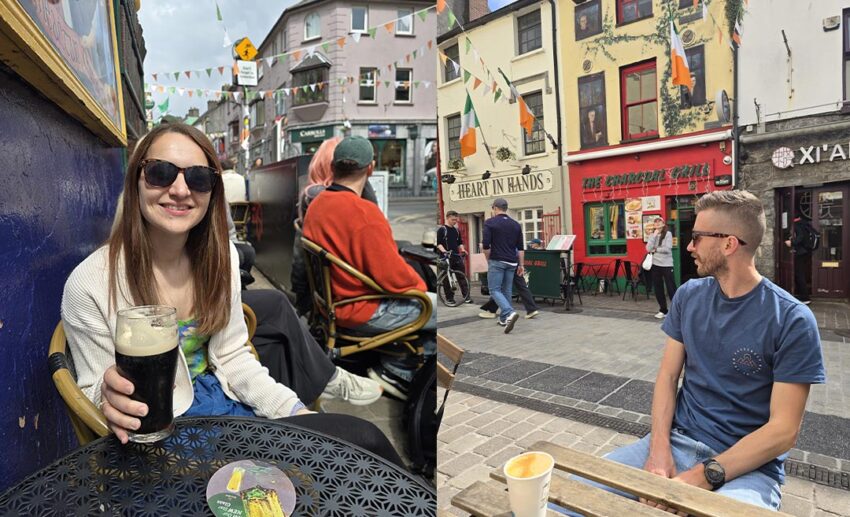
That evening, after showering and eating, we went out to an Irish music night in Galway. Hearing Galway Girl performed live in Galway, Guinness in hand, after cycling over a hundred miles over two days, felt absolutely incredible.
Ten years earlier, I had struggled to cycle up and down an Amsterdam street.
Now I had just cycled 135 miles around western Ireland with my camping equipment strapped to the back of my bike.
I’m not an expert cyclist, and I’m still very much a beginner at bikepacking. But I’ve learnt that perhaps being a beginner isn’t something to overcome before you start enjoying an adventure.
Sometimes, being a beginner is the adventure.
Planning your first bikepacking trip in Ireland
If you’re tempted to try bikepacking for the first time, taking some of the logistical uncertainty out of the equation can make a huge difference. For our trip, I’d recommend looking into:
Bike hire
West Ireland Cycling, Galway (Maps)
EUR75 (about RM355) per bike for 48 hours (May 2026)
Accommodation in Galway
The Nest, Salthill (Maps)
Campsite near Clifden
Clifden Camping and Caravan Park (Maps)
Wild Atlantic Way
Official website
Key stops
☐ POTA (Maps)
☐ Cooke’s Caife Casla (Maps)
☐ Wild Atlantic Way Discovery Point – Pearse‘s Cottage/Teach an Phiarsaigh (Maps)
☐ Roundstone
☐ Dog’s Bay (Maps)
☐ Clifden
☐ Connemara National Park (Maps)
☐ Kylemore Abbey (Maps)
☐ The Purple Door Cafe (Maps)
Emergency/back-up option
Bus Éireann Route 419
What we packed
☐ One two-person tent
☐ Two sleeping bags
☐ Two roll mats
☐ Clothes including layers and coats (it’s Ireland!)
☐ Snacks
☐ 2L water per person
☐ Sun cream
☐ A first aid kit
☐ A puncture repair kit
All photos are by and courtesy of the writer, Jessica Holmes.