A three-week journey through Kazakhstan and Uzbekistan revealed how following curiosity, rather than algorithms, can lead to unexpected travel experiences.
The image that took me to Central Asia wasn’t from Instagram or TikTok, or anything I’d read online. It wasn’t part of a bucket list or trending destination guide. It was a single photograph in a magazine – pine trees lining a still, glassy lake, backed by mountains I couldn’t quite place.
Kazakhstan, it said.
It didn’t match anything I thought I knew about the country. And that was enough to draw me in.
Within weeks, I was researching routes, piecing together transport options, and planning a three-week trip across Kazakhstan and Uzbekistan. There were surprisingly few itineraries that matched the kind of trip I wanted. Just fragments of information, a sleeper train I wanted to travel on, and the promise of the Silk Road alongside lots and lots of hiking opportunities.
Following curiosity beyond the usual routes
This trip felt different from the start.
There were no direct flights to where we wanted to go, so we flew into Tashkent, Uzbekistan, and took a sleeper train across the border to Almaty, Kazakhstan. It wasn’t the fastest or easiest route, but it became part of the experience.
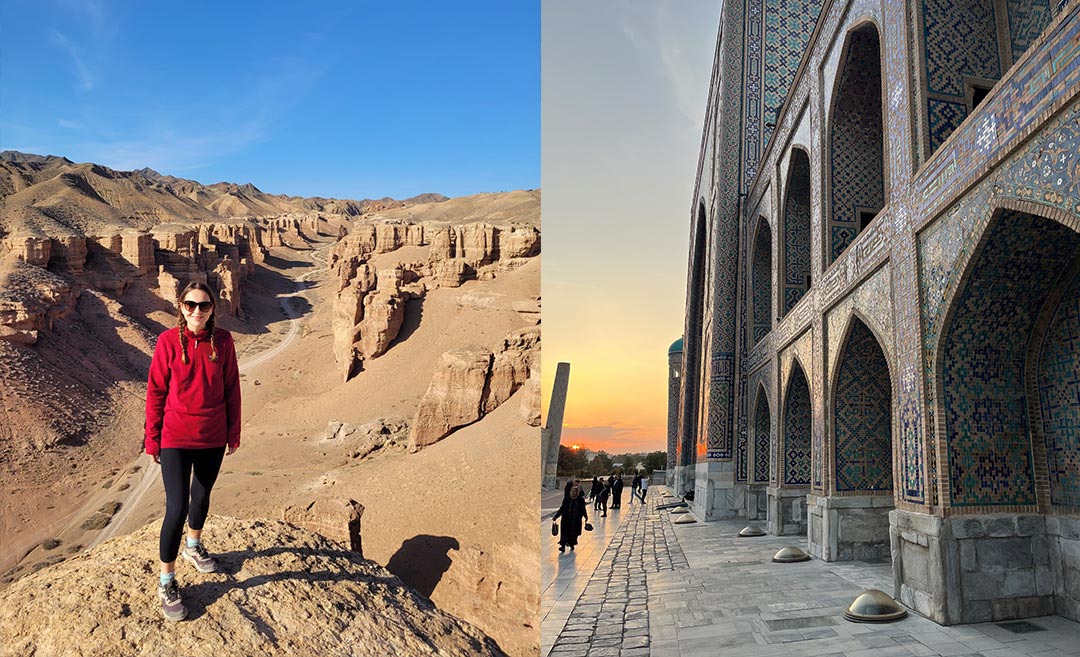
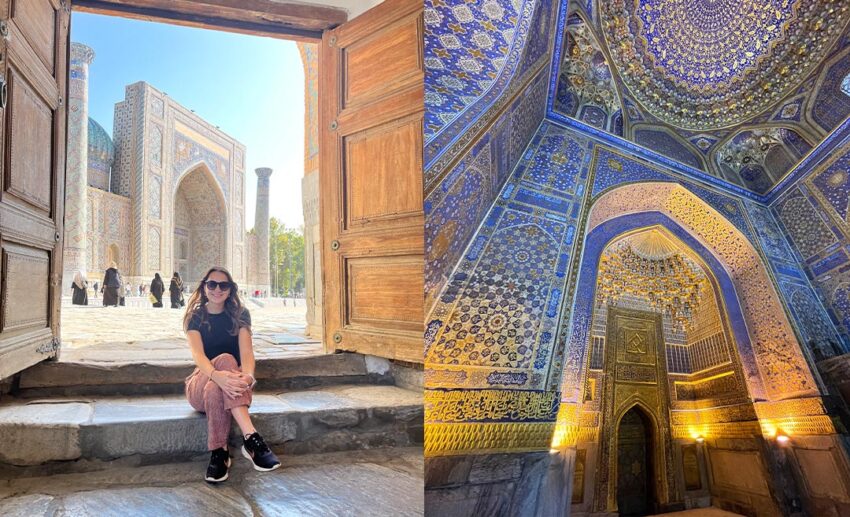
Uzbekistan offered a bit of everything. Cities like Samarkand and Bukhara felt steeped in history, their intricate mosaics and Silk Road architecture completely surreal and mind-boggling in their detail. It was impossible not to be present there. When you’re standing in front of centuries-old craftsmanship, wondering how the buildings are still standing and marvelling at the intricacy of mosaic detailing, the distractions around you become pretty much irrelevant. Especially if you purposely don’t buy an eSIM and only connect to Wi-Fi at your accommodation (which you’re never at, because you’re too busy exploring).
After exploring the cultural delights of Uzbekistan for 10 days, we took a sleeper train which was an experience all by itself, and crossed into Kazakhstan. Once there, we hired a car in Almaty, and drove out towards the landscapes that had first caught my attention in that magazine.
Finding space in Kazakhstan’s wild landscapes
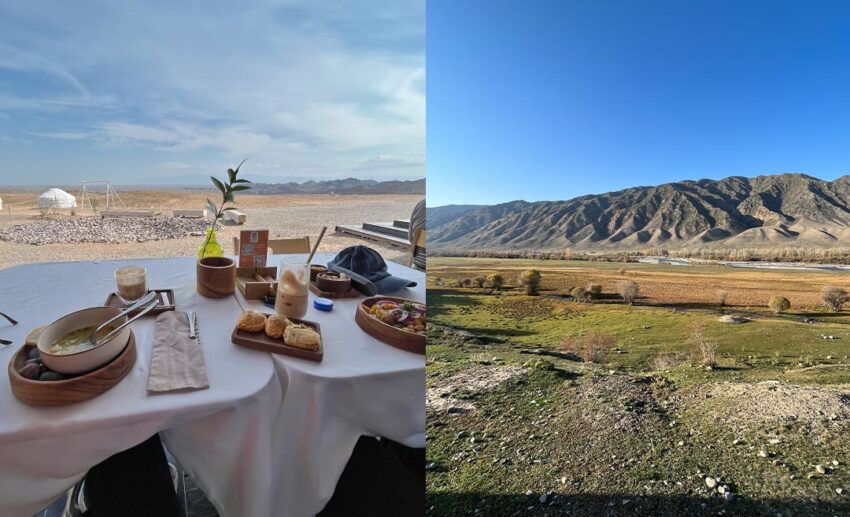
When you step away from familiar routines and move towards deeper connection with people and nature, your mind begins to relax, and everything around you becomes a little more vivid.
In the national parks surrounding Almaty, phone signal disappeared quickly, leaving us to navigate with fewer conveniences and pay closer attention to our surroundings. Directions became vague. Google Maps stopped updating, and we relied on pre-downloaded offline maps. And instead of feeling stressful, it felt freeing.
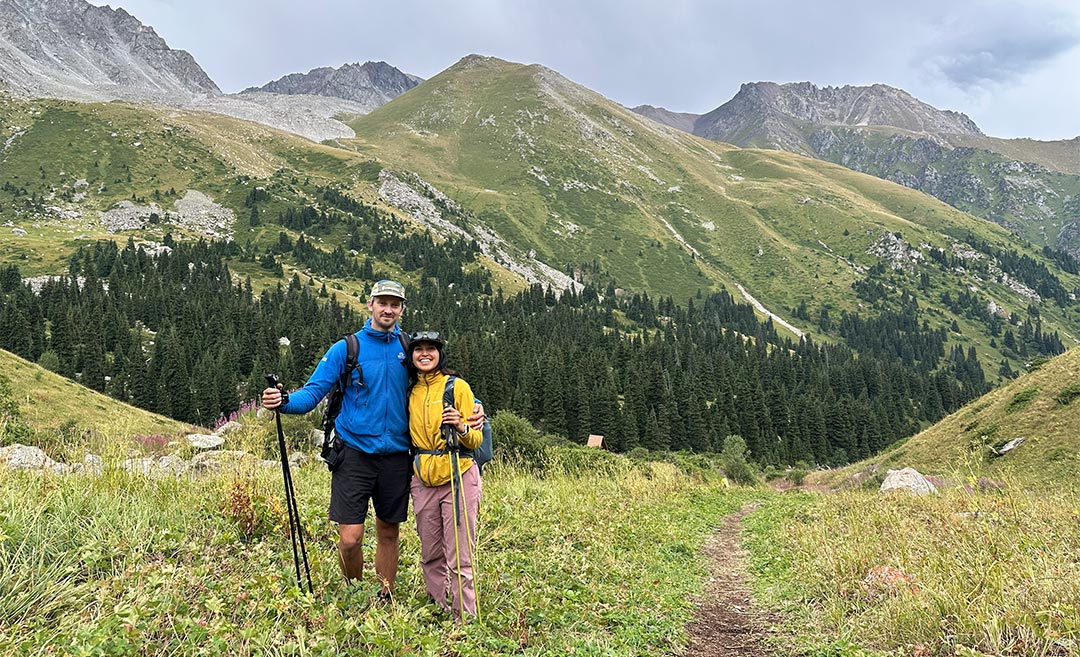
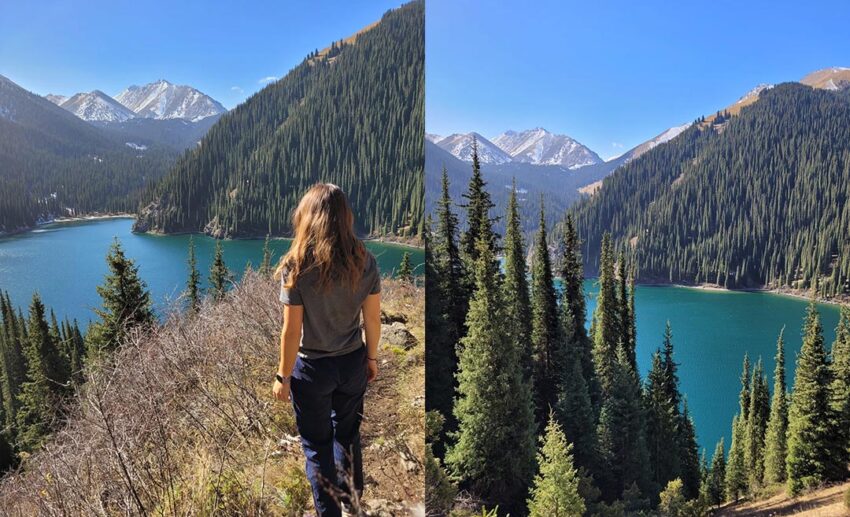
At Kolsai Lakes National Park, we set out incredibly early to hike towards the upper lakes. What started as a steady walk turned into one of the most physically demanding hikes I’ve ever done.
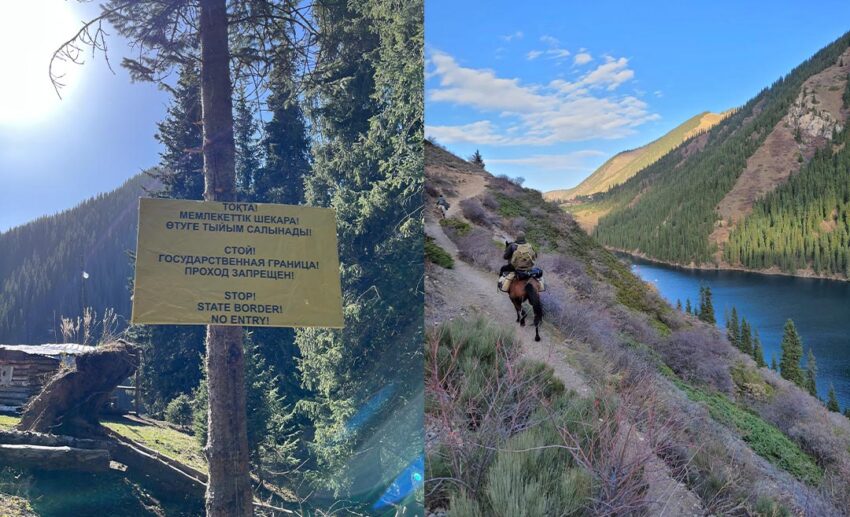
The hike we did, a return trip from the Kolsai Lakes visitors centre, was 21.5km long and with an elevation gain of 1,230 metres, it was seriously strenuous. The only other soul we saw on the hike was a local on horseback, like something out of a film.
At one point, we veered slightly off track and, without realising, crossed into Kyrgyzstan.
There was no notification or change of landscape, and then we hit a signpost that said we’d crossed over a border and to turn back.
But the views were amongst the most impressive I’ve ever seen in my life. The landscape was vast and untouched. Pine forests stretched around glacial-blue water, the mountains rising dramatically behind them. It looked like Switzerland or Canada, certainly not how I imagined Kazakhstan, other than that picture I’d seen that had inspired the trip.
Finding meaning in the unexpected
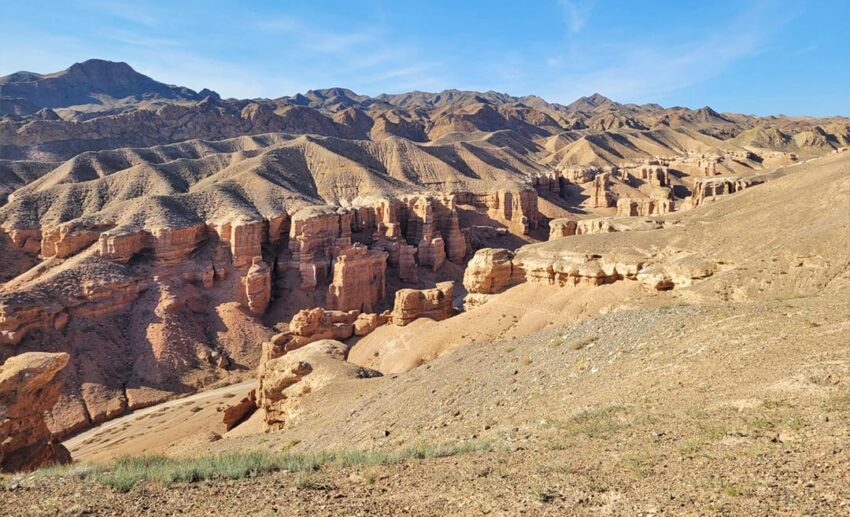
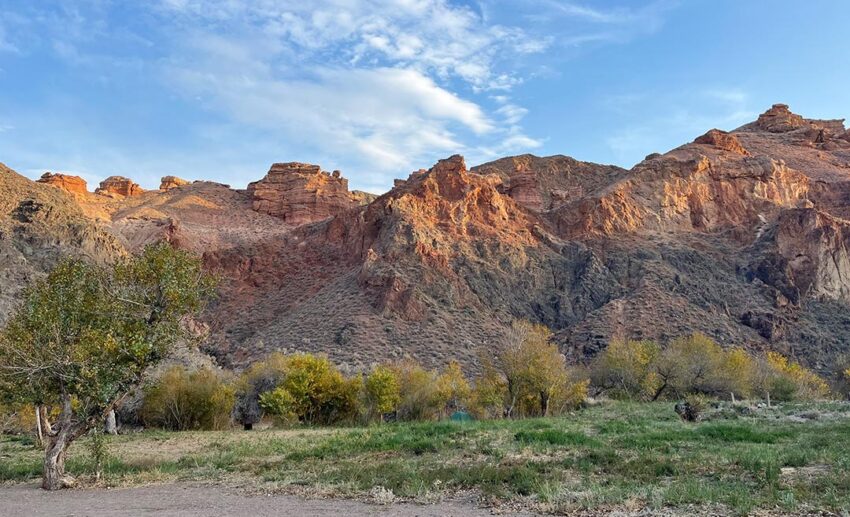
At Charyn Canyon, often compared to a smaller version of the Grand Canyon, we camped overnight with only one other group nearby. As the sun set, the landscape shifted into deep shades of red and gold, and the temperature dropped quickly.
That afternoon, a group of locals had invited us to sit with them. They shared vodka and chocolate with us, and what started as a brief interaction turned into hours of conversation, laughter, and connection, despite the language barrier.
It was thoroughly enjoyable, and completely unexpected.
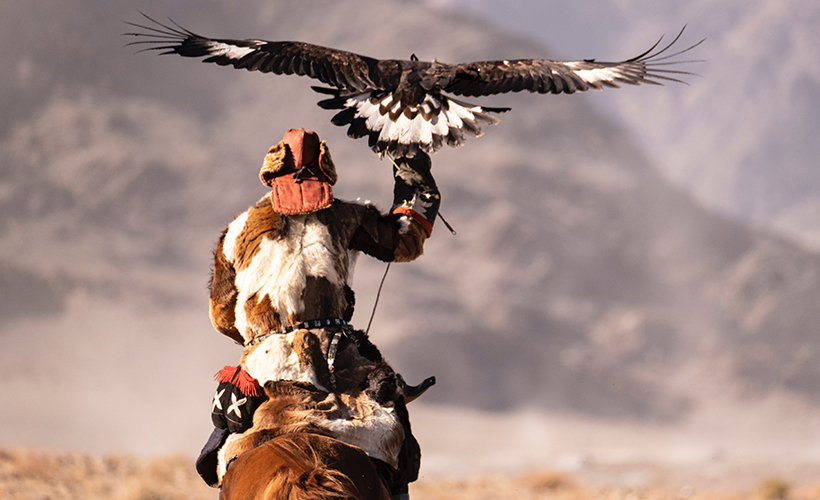
Earlier that day, I’d stood just metres away from a golden eagle, so large it felt almost unreal. There was no way to capture it properly; my phone was buried in my bag, and I was too amazed to stop looking – almost as though, if I looked away, it might disappear. It was one of those moments that exists only in memory. And somehow, that made it more meaningful.
The freedom that comes from leaving plans imperfect
Travelling without constant access to your phone or signal changes how you move through the world.
You notice more around you. You rely on your instinct. You ask local people questions. You take wrong turns because you don’t have a way to route it on your phone.
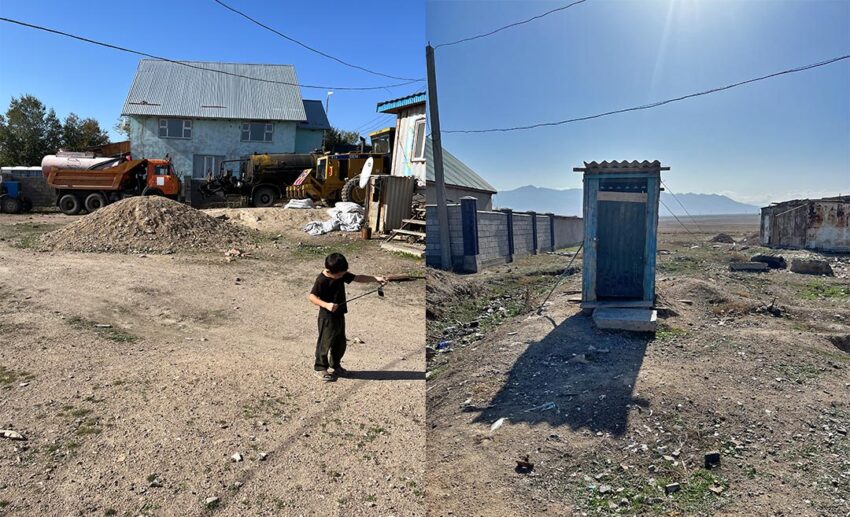
In Kazakhstan, this often meant stopping at roadside cafes with no English menus, ordering food by pointing, and being surprised by what arrived. One stop stood out for me – a small roadside restaurant where a young boy, no older than four, proudly escorted guests to the outdoor toilet when required. I tipped him, and his reaction of pure joy was unforgettable.
In Uzbekistan, it meant wandering through ancient cities without a strict plan, letting the streets, architecture, and our mood guide us. We’d turn corners simply because something looked interesting, lingering longer in places that drew us in, without feeling the need to move on to the ‘next thing’.
Not everything is efficient and not everything goes to plan when you travel in this way. But that’s where the richness lies – in the moments you couldn’t have searched for, mapped out, found on a tourist itinerary, or predicted.
Travelling as a woman in less-visited places
Central Asia isn’t often highlighted as a go-to destination for women travellers, but that’s slowly changing as more travellers look beyond traditional tourist routes.
I felt safe and welcomed wherever I went. People were curious, friendly, intrigued, and generous with their time. There was a genuine openness that made interactions feel easy, even without a shared language.
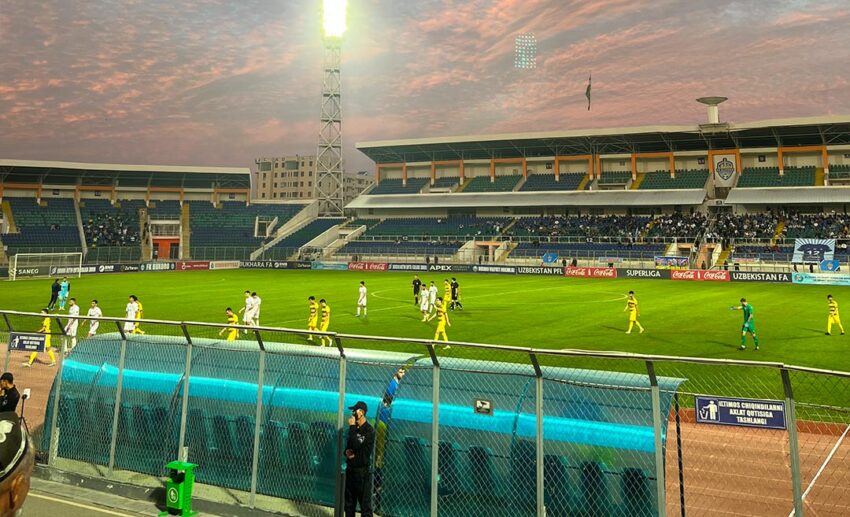
The only moment of discomfort I felt was at a local football match. I realised I was the only woman in the stands. The initial attention was intense – there were curious stares that lingered a little too long. But after a while, it faded. The focus shifted back to the game, and I became just another spectator. Some nearby men even shared their sunflower seeds with me, and I joined in happily with chewing them up and spitting out the shells as everyone else was doing.
It was a reminder that unfamiliar places often become much less intimidating once you’re in them.
Discovery beyond the algorithm
It’s easy to fall into the habit of letting algorithms guide where we go and what we see. The same destinations appear repeatedly, reinforced by popularity and visibility on social media.
But when everything is pre-selected and optimised, travel can start to feel predictable.
Some of the most meaningful experiences come from stepping away from that. From choosing places not because they’re trending, but because something about them sparks curiosity, even if you don’t fully understand why.
This trip began with a single image and unfolded slowly through curiosity, research, instinct, and a willingness to figure things out along the way. There were gaps in the plan, moments of uncertainty, and a sense of not always knowing what was coming next, but that was part of what made it feel real.
Central Asia is becoming more popular, but it still offers something increasingly rare: space. Not just physical space, but mental space too. Space without crowds and without constant stimulation.
Space to think, to disconnect, and to experience a place on your own terms.
Zafigo Pro Tips: Planning your Kazakhstan and Uzbekistan adventure
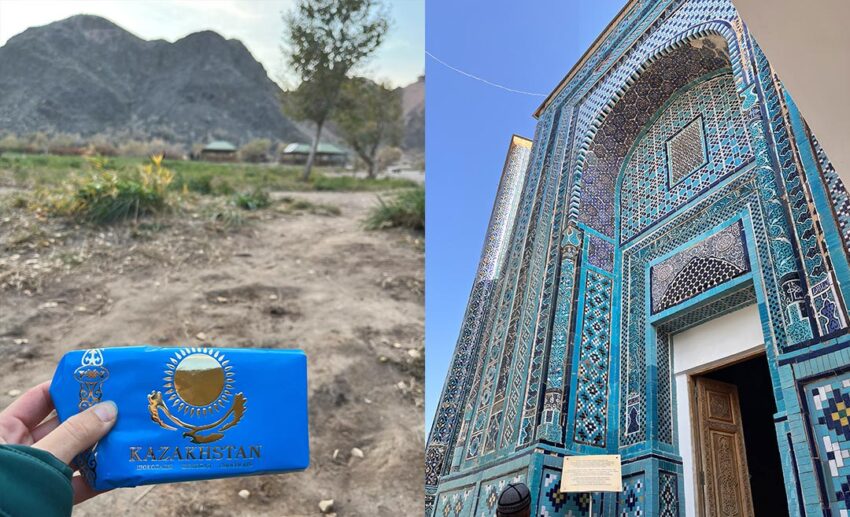
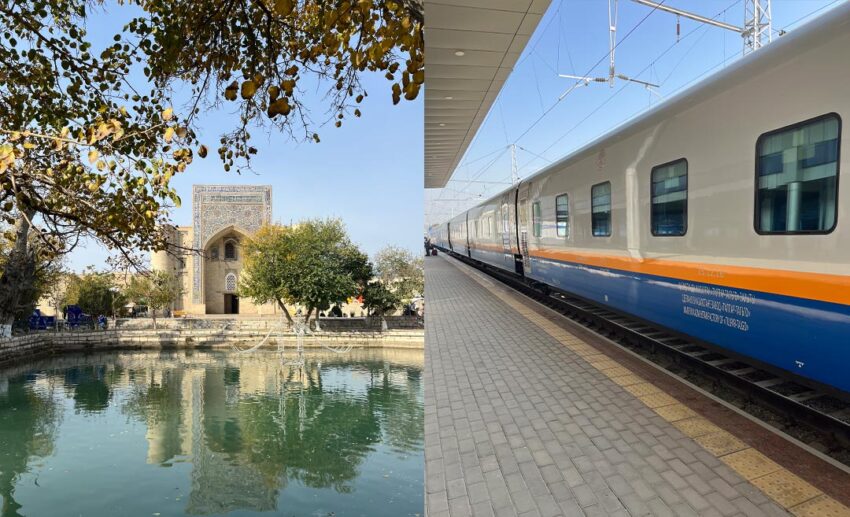
For Jessica, that journey began with a single photograph. For others, it may be a route they have never taken, or simply a curiosity they choose to follow. If you’re considering a similar journey through Uzbekistan and Kazakhstan, here’s a practical breakdown of how Jessica planned her trip:
Uzbekistan
● Flights: London to Tashkent (direct), Uzbekistan Airways
● Train tickets: Booked via Uzbekistan Railways website
● Cities explored: Tashkent, Samarkand, Bukhara
● Getting around: Trains between cities; taxis arranged through accommodation or local apps
● Highlights: Silk Road architecture, historic mosques and madrassas, walkable old towns
● Tips:
– Book train tickets in advance, especially for high-speed routes or the sleeper train
– Carry cash (UZS) as smaller places may not accept cards
Kazakhstan
● Route: Sleeper train from Tashkent to Almaty and back
● Train tickets: Booked via Uzbekistan Railways website
● Car hire: Collected in Almaty for access to national parks, booked via Vladex (note: we needed an International Driver’s Licence, which we arranged while still in the U.K.)
● Accommodation:
– Saty, near Kolsai Lakes National Park – Apartment with incredible mountain view through Booking.com
– Charyn Canyon National Park – camped by the River Charyn, hired equipment from the visitors centre for GBP10 per person – tent, sleeping bags, ground mats. The camping area by the river has toilet facilities open all night
● Activities: Hiking, camping, scenic drives
● Highlights: Remote landscapes, low crowds, opportunities to fully disconnect
● Tips:
– Download offline maps on Maps.me before leaving Almaty
– Be prepared for limited phone signal in remote areas
– Pack layers as temperatures can change quickly, especially in the mountains
All photos are by and courtesy of the writer, Jessica Holmes.