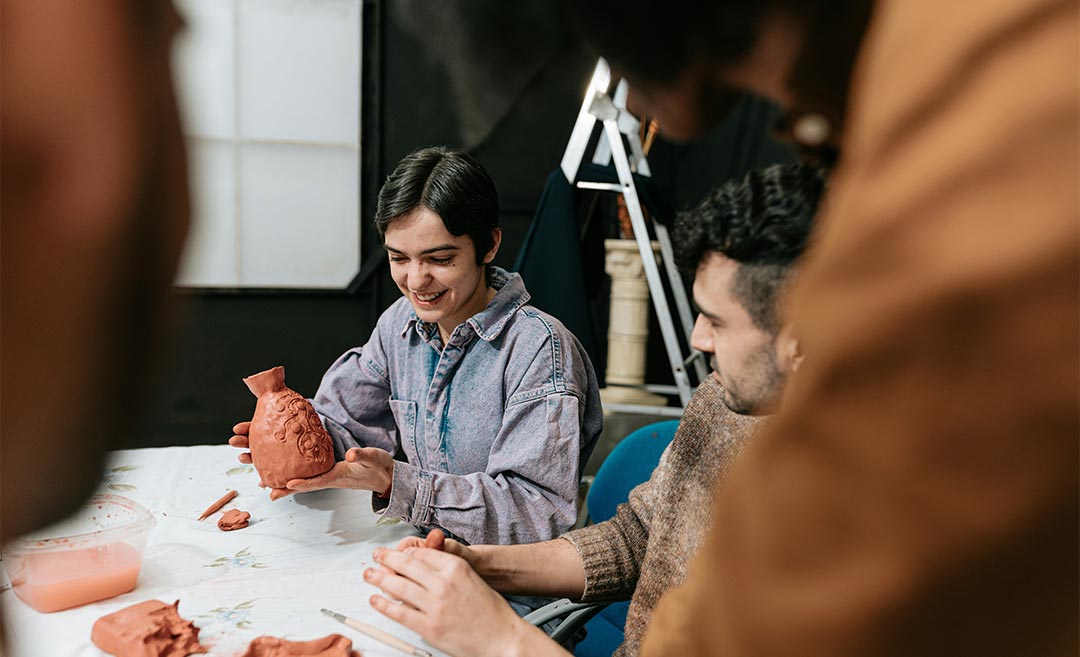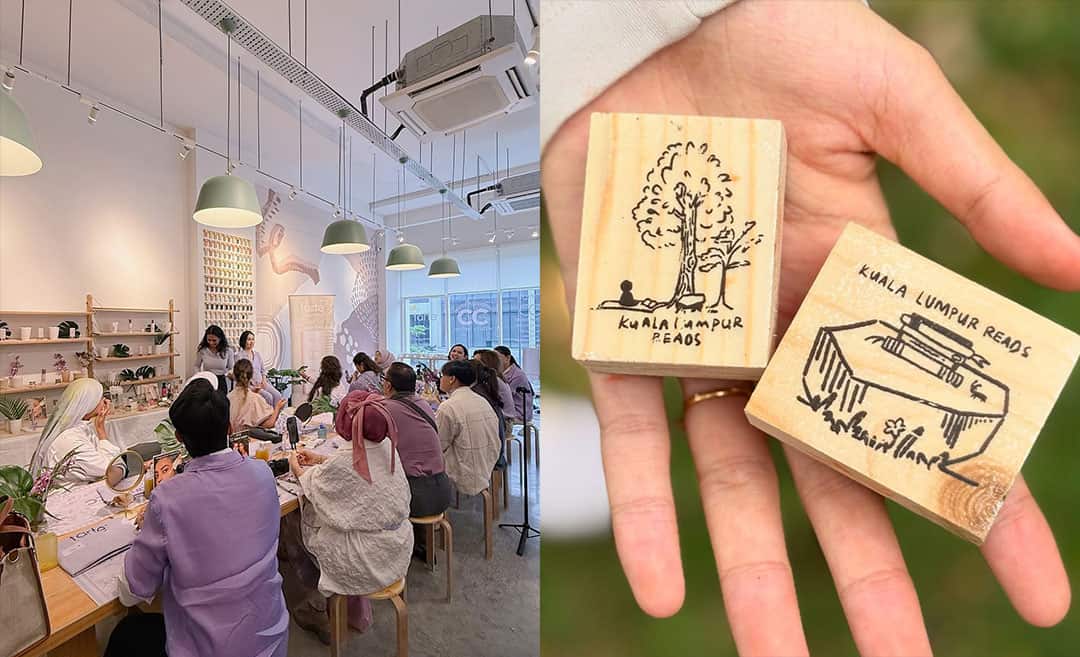
Creating low-pressure third places for adult friendship in Kuala Lumpur through creative pottery classes at Beary Potter Studio and community silent reading sessions with KL Reads. (Left image from @bearypotter_studio; Right image from @kualalumpurreads)
When you were eight, making a friend was suspiciously easy. You sat next to someone in class, she lent you an eraser, you both shared the same passionate dislike of the PE teacher, and by recess, there was a reasonable chance you were best friends. Life was so easy back then. Adult friendship has considerably more admin.
By your 30s and 40s, the people you once saw without trying may live across town, work different hours, have moved to a different country, or be deep in the logistics of children and family. Some friendships survive comfortably on three dinners a year and a WhatsApp group; others quietly fall away.
And if you have moved to Kuala Lumpur (KL), returned after years abroad, or simply realised your social circle has become smaller, making new friends can present an oddly uncomfortable question: where exactly are adults supposed to find each other? Perhaps part of the problem is that we keep treating friendship as the activity itself.
There is something rather exposing about walking into a room for the sole purpose of “meeting new people”. Believe me, I have been there and done that. Put something else in the middle, though, and the dynamic changes. You are no longer attempting to manufacture chemistry with a stranger. You are running five kilometres, trying not to destroy a lump of clay, or wondering why everyone else understood the board game instructions except you. And friendship gets to happen in the margins.
Sociologist Ray Oldenburg called the places outside home and work where people gather informally “third places”. In KL, organised hobbies can perform a similar function, creating repeated, low-stakes opportunities to meet people without having to organise the socialising from scratch.
Run first, introduce yourself later
Take Kuala Lumpur Frontrunners. The group holds regular Saturday morning sessions at KLCC Park, where people can walk, jog, or run the park loop at their own pace. Current listings show the group meeting at 8.15am, followed by coffee and socialising. There is no formal sign-up for the Saturday run, and you can simply turn up.
Running is particularly good at removing that interview-like aspect from meeting someone new, and eye contact is optional. Silences are perfectly acceptable because everyone is (struggling to) breathe, and you can spend 20 minutes discussing running shoes before discovering what the person next to you actually does for a living.
More importantly, there is a next Saturday.
Clay is an excellent social buffer
Pottery offers almost the opposite pace, but if you’re an introvert, I challenge you to explore this.
At Beary Potter Studio, which has locations in Bukit Jalil and Cheras C180, beginners can take one-day pottery classes, while those wanting something more regular can join short courses. Its classes cover wheel throwing and hand-building, with beginner-friendly sessions requiring no previous pottery experience.
There is an unspoken social advantage to having your hands occupied because nobody has to sit opposite a stranger and produce fascinating conversation on demand. You can talk while centring clay. You can ask someone how they got their bowl to stay upright. If your own collapses spectacularly, you have provided the table with material for at least five minutes.
A recurring class also creates familiarity without requiring immediate intimacy. At first, someone is simply the woman whose mugs are considerably better than yours. A few Sundays later, you know where she works. Eventually, someone asks if anyone wants lunch afterwards. This is how many adult friendships actually begin — not with an instant click, but with recognition.
Read together, without having to perform
Maybe the gentlest example in KL is Kuala Lumpur Reads, the silent-reading gathering at Perdana Botanical Garden. The idea is almost comically simple: bring your own book and something to sit on, then read alongside other people.
The initiative began in 2023, when Victoria Navina started KL Reads after being inspired by similar reading communities in India. It has continued as a regular Saturday morning gathering, with the initiative describing its purpose as reading, recreation, social cohesion, and the use of green public space as a no-cost third place.
What makes it especially appealing is what it does not require. There is no assigned novel to finish and no pressure to arrive with an articulate opinion on chapter seven. Readers just need to bring whatever they want to read and spend time alongside one another.
For someone who finds conventional mixers exhausting, this may be closer to ideal. You can attend alone without looking conspicuously alone. Conversation, when it happens, already has a starting point: “What are you reading?”
Because not every new social life needs to begin loudly.
Pickleball does the introductions for you
For something considerably less quiet, there is Pickle Social Club in Bukit Kiara. Its Open Play sessions are specifically designed to mix players of similar ability, rather than requiring you to arrive with an established group. The club currently offers novice and intermediate Open Play sessions, with two-hour drop-in formats.
This is where social sport has an advantage over simply joining a gym. Other people are not incidental to the activity. You need them.
Games rotate, partners change, someone explains the rules, another misses an easy shot, and everyone gets to pretend theirs was not worse five minutes earlier.
For adults rebuilding a social circle, this kind of structure matters. You are interacting because the game requires it, not because someone has instructed the room to “get to know one another”.
And because pickleball draws people through the activity rather than their workplace or stage of life, it can also put you alongside people you might never normally meet.
When small talk comes with a rulebook
The less obvious option may also be one of the most socially efficient: board games.
boardgamecafe.net has been running open meet-ups in Kuala Lumpur for years, including its recurring Casual Friday sessions at BGC Space in Cheras. Current September 2026 listings show the Casual Friday meet-ups continuing at BGC Space, with light-to-medium games aimed at adults, including people who are new to board gaming. Hosts teach the rules, so turning up without encyclopaedic knowledge of European strategy games is entirely acceptable.
A board-game table gives strangers something adults are often missing when trying to make friends: an excuse to interact repeatedly without having to disclose their life story. There are questions to ask, turns to take, rules to explain, and shared jokes that develop by themselves. Four people who arrived knowing nobody can spend three hours negotiating, accusing each other of suspicious tactics, helping each other understand the objective of the game, and laughing over the same ridiculous mistake.
By the end of the evening, asking, “Are you coming next Friday?” feels much easier than, “Would you like to be my friend?”
You don’t always have to pick one thing and stick to it
If committing to one hobby sounds like too much commitment, there is another approach: keep trying new ones.
Trybe by Zafigo brings women together every few months to learn or experience something different, from creative workshops and hands-on activities to other experiences designed to get people trying something outside their usual routine. You get to meet a new group of people and try something new each time.
That makes it another way into the same kind of low-pressure connection explored throughout this article. You do not need to arrive with an established friendship group, a long-term hobby, or even a clear idea of what you enjoy. You just need to be curious enough to give the next thing a go.
For readers who want to try something new with other curious people, keep an eye on Trybe by Zafigo for upcoming events.